
Culture Is The Territory
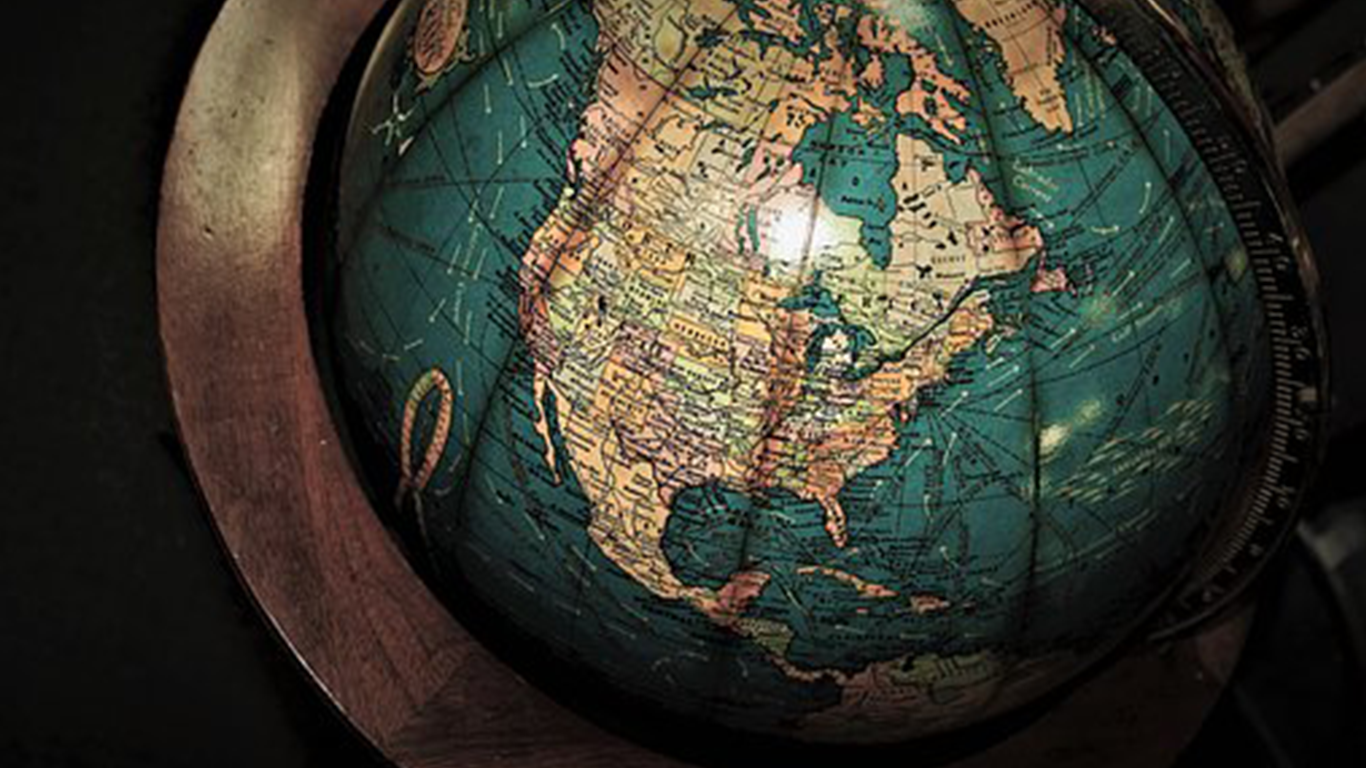
Alfred Korzybski, was a scholar in the field of general semantics. Although his work is extensive in the field and he is oft quoted I want to draw attention to his thoughts about map and territory. Korzybski says:
A map is not the territory it represents, but, if correct, it has a similar structure to the territory, which accounts for its usefulness.
— Alfred Korzybski, Science and Sanity
A map is a useful tool, it can provide valuable insight and some relevant context but it is limited. A map can give you an idea of what you are viewing but it can’t provide a multi-dimensional picture. If one extrapolates this reasoning to business and social environments it is easier to see where maps are limited. A map can be more than a directional tool. A map can also be of use within organizations. A map can be an organizational chart, a manual of operation, a statement of purpose and more. All of these provide limited context but they do not fully account for the breadth of the organization. An example is a map tool many of us use quite often Google Maps. If you think about Google Maps when traversing NYC, it can guide you from Union Square to SoHo but it provides little context as to what the actual territory consists of. It won’t tell you the stories of the homes and businesses that exist along your route. It won’t have the history of the neighborhood. In order to understand your map and have it represented as territory you need culture.
Culture provides the necessary color and context to make a simple map limited by its inherent structure far more robust. In short, culture is the territory. A recent WSJ article highlighting former State Department official Robin Raphael is an instructional case study for how the organizational map is limited often with far reaching consequences. Ms. Raphael ran afoul of the FBI and others in the intelligence community primarily because of the cultural differences within their respective organizations. Ms. Raphael having worked and lived in Pakistan, as a diplomat understood the territory because she knew the culture in which she was operating. The FBI only understood the map, including the organizational structure of titles and roles, which Ms. Raphael consistently bumped up against. The map versus the territory is a relevant distinction with real world ramifications.
A map is an abstraction of our physical reality. It provides a scale to denote distance but it does not truly represent our world. Culture fills in those gaps and allows the user to unleash the limitations of boundaries, as culture is almost limitless. The duality of the nature of culture means it is both limitless and constantly shifting. Because culture is hard to grasp there is a rush to place measurable limits on its importance and efficacy. Data has become one of the primary ways to bind culture to seemingly easy metrics. The data acts as a confirming bias that serves to mitigate risk in cultural spaces. Embracing culture however requires you to accept its unpredictable nature. Your map needs to incorporate the unbound nature of culture and as a participant in culture spaces you have to be comfortable with being “uncomfortable”. Data doesn’t make the map any more relevant if it does not also use culture to frame the territory. Data measures the risk of an action, but it does not measure the risk of NOT doing something. There is inherently a predictive nature to culture because in its rawest forms it exists on the margins. That doesn’t mean it is always a perfect indication of where relevant (and cool) insights are headed but your chances of hitting those marks is much better. Again, there is a risk to NOT doing something/participating in cultural territory.
Again, the map provides a starting point but it is culture that is the territory. The territory and its many potential lessons is what are important. I mentioned that culture is unpredictable; this is true. But it doesn’t mean it does not have a predictive nature. We must expand our expectations of what that means. Our cultural sample sizes, now still traditionally beholden to demographic measurements, must become larger and more diverse. A data model designed to generate the most likely singular predictive outcome is broken. The territory that culture covers will have several potential outcomes within a given set of variables. Culture is embedded with multiples possibilities. Often those possibilities exist where the signals are the weakest i.e. on the margins. Some of these signals might be non-existent by traditional quantitative tools because they are not attuned to catch them. They are measuring a map, looking at predetermined coordinates. Only by adapting a territorial approach to culture can you identify and evaluate all that the territory has to offer.
 The Deep Dive
- Episode 263: The Future That Was w/ Dubra Mitra June 18, 2026Philip welcomes Dubra Mitra, scholar and author of The Future That Was: A History of Third World Feminism Against Authoritarianism. In their conversation they discuss the various global women collectives that organized their writing, publishing and intelligence gathering in the face of post-colonialism and rising authoritarianism and the critical lessons we can draw from their […]
- Episode 262: How Not to Save the World w/ Anthea Lawson June 5, 2026Philip welcomes Anthea Lawson, author How Not to Save the World: Doing Good Without Annoying Everyone. In their conversation they tackle the state of progressive politics and whether it is possible to change someone’s mind across cultural and political beliefs. The Drop – The segment of the show where Philip and his guest share tasty […]
- Episode 261: Ethics and Culture of AI w/ Clara Hawking May 29, 2026Philip welcomes AI expert Clara Hawking to the show. In their conversation, they discuss the current cultural, regulatory and ethical journey of artificial intelligence and what is inevitable and what isn’t. The Drop – The segment of the show where Philip and his guest share tasty morsels of intellectual goodness and creative musings. Philip’s Drop: […]
- Episode 260: Unvaccinated Under God w/ Kira Ganga Kieffer May 21, 2026Philip welcomes Kira Ganga Kieffer, author of Unvaccinated Under God: Religion and Vacccine Hesitancy in Modern America to the show. In their conversation, they trace the origins of what is popularly known as the “anti-vaxx” movement and how the religious right has influenced its trajectory. The Drop – The segment of the show where Philip […]
- Episode 259: Protest History of the United States w/ Gloria Browne-Marshall May 14, 2026Philip welcomes scholar/author and Emmy Awarrd winner Gloria Browne-Marshall to The Deep Dive to discuss her latest book A Protest History of the United States. In their conversation, they trace the social and political structure of the United States through the lens of protest movements. The Drop – The segment of the show where Philip […]
- Episode 258: Deficit Thinking & Feminist Economics w/ Emma Holten May 7, 2026Philip welcomes Emma Holten, author of Deficit: How Feminist Economics Can Change the World. In their conversation, they discuss how the “deficit’ frame impacts how the economy thinks about women’s labor and how feminist economics can create lasting changes in the world. The Drop – The segment of the show where Philip and his guest […]
- Episode 257: Redesigning Thinking & Service Design w/ Clive Grinyer April 29, 2026Philip welcomes Clive Grinyer, author of Redesigning Thinking: How Service Design is Solving Our 21st Century Challenges. In their conversation they reflect on how thinking itself can be framed as a design issue, how we build care into our processes and what constitutes “doing the right thing?” The Drop – The segment of the show […]
- Episode 256: The Great Resistance w/ Carrie Gibson April 22, 2026Philip welcomes Carrie Gibson, author of The Great Resistance: The 400 Year Fight to End Slavery in the Americas. In their conversation they trace how the history of resistance has been purposely obscured and how the lessons from those ancestorial responses to slavery and oppression are relevant today. The Drop – The segment of the […]
- Episode 255: The Business of Meaning w/ Peter Spear April 16, 2026Philip welcomes. Peter Spear, host and curator of the newsletter and podcast That Business of Meaning to the show. In their conversation, they discuss all things culture and how the current marketing and media landscape make sense of the world around it. The Drop – The segment of the show where Philip and his guest […]
- Episode 254: Bernie Goetz, Reagan and the Rebirth of White Rage w/ Heather Ann Thompson April 2, 2026Philip welcomes Heather Ann Thompson author of Fear and Fury: The Reagan Eighties, The Bernie Goetz Shootings and the Rebirth of White Rage to the show. In their conversation they discuss how the pivotal Bernie Goetz shooting of four innocent Black teens alongside the conservative austerity and race baiting of the Reagan Presidency set the […]